



 Veterinary care
 Ways to get care
 Visit information
 Pet wellness plans
 Virtual petcare
 Pet Chat™ information
 Locations
 MyBanfield
 Shop packages now
 Request information
 Package FAQs
 NEW! Banfield Access Plan
 Pet health articles
 Puppy care
 Kitten care
 Senior care
 Dental care
 Diet and nutrition
 Ear care
 Parasites
 Fleas
Fleas Ticks
Ticks Mites and mange
 Worms
Worms Skin and coat care
 Mobility
 First aid
 Vaccinations
 End of life care
 Bblog
Bblog Podcast - Not Just Fluff
 Video Vault
 About us
 Contact us
 Our leadership
 Shop
Shop
 Locations/appointments

 Print
Print
is wet or dry food better for cats?
Walk down the cat food aisle and you're immediately faced with a wall of choices — crunchy kibble, savory cans, pouches of pâté and stew. It's a lot. And if you've ever stood there wondering which one is actually better for your cat, you're not alone.
The honest answer: both have real benefits, and the best choice depends on your cat's health, habits, and your household routine.
Wet food vs. dry food: a quick breakdown of cat food
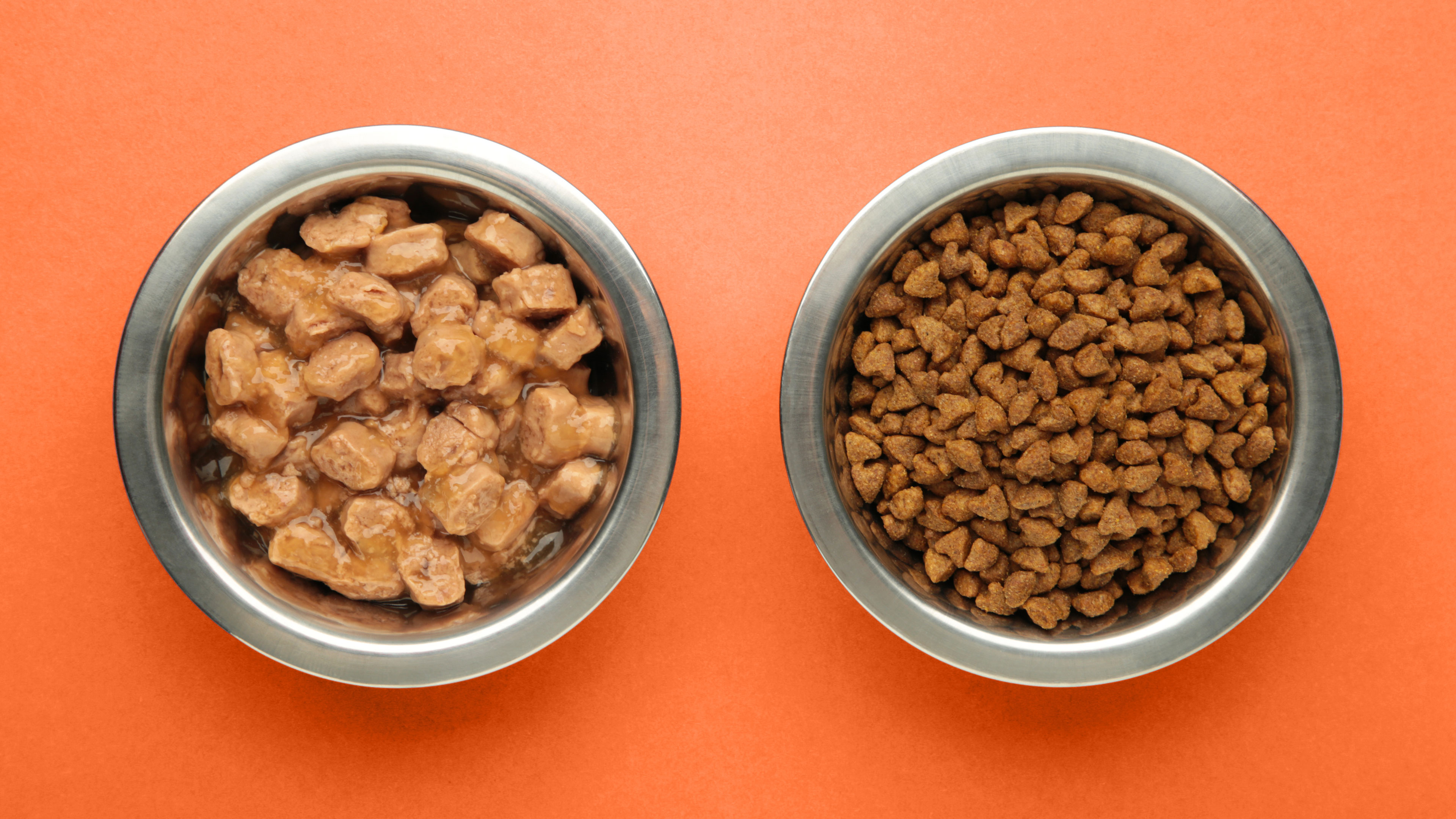
Wet food comes in cans or pouches in textures like pâté, chunks in gravy, or shredded meat.
Pros:
- High moisture content — helpful for cats who don't drink much water
- Easier to chew, making it a good option for kittens, seniors, or cats with dental issues
- Individual portions make it easier to monitor calories
Cons:
- Shorter shelf life — opened cans need refrigeration and should be used quickly
- Messier — bowls need to be washed between each use
- Typically more expensive per serving than dry food/li>
Dry food (kibble) comes in bite-sized pieces and is stored in bags.
Pros:
- Easy to measure, store, and leave out
- Long shelf life — no refrigeration needed
- More budget-friendly
- More calorie-dense — the same quantity generally contains more calories than wet food
Cons:
- Low moisture content — may not provide enough hydration on its own
- Some picky cats simply prefer the smell and taste of wet food
- Easy to overfeed, especially if the bowl stays full
Mixing wet and dry food is a popular middle ground, and for good reason. Many cat owners serve wet food in the morning and dry food at night, or use wet food as a topper on kibble — a simple way to balance hydration with the convenience of dry food.
Do vets recommend dry or wet cat food?
It depends. Most veterinarians won't point you to one format over the other — instead, they'll help you find the right fit based on your cat's stage of life, lifestyle, and any health concerns that need to be factored in.
Regardless of format, here's what vets generally look for on a label:
- AAFCO and FDA logos, which confirm the food meets established nutritional standards
- A named protein (like chicken or salmon) listed as the first ingredient
- Limited fillers and artificial additives
When in doubt, bring the question to your veterinarian. They can look at your cat's age, weight, health history, and habits to help you land on a feeding plan that works for both of you.
Should indoor cats eat wet or dry food?
Both can work well. What you're really aiming for is a cat that's well-nourished and well-hydrated, eating the right amount for their size and age. The food should also support any health conditions. If you want to make the right choice for your pet, read on to understand more about cat food labels.
What is the 25 rule for cat food?
The 25 rule is an FDA labeling guideline that affects how pet food products are named. How much it has of a single ingredient (like chicken, salmon, or beef) determines how they can label a product.
Here's how it works:
| Amount | Rate | Example |
| 95% or higher | May be fully labeled as food | Chicken cat food |
| 25% - 94% | Needs a qualifying word |
Chicken dinner |
| At least 3% | Can be included in product name | ...with chicken |
| Less than 3% | Cannot be included in product name |
Reading the ingredient list is always more informative than the name on the front of the package. Check out our tips for how to read pet food labels for more guidance.
So, what should you feed your cat?
It comes down to what your cat will actually eat. It doesn't matter how nutritionally ideal a food is if your cat won't touch it. As long as your furry friend is getting consistent, quality nutrition and hydration that matches their health needs and your budget, you're doing right by them.
If you're not sure which is best for your cat, come in for a nutrition consultation. It's included with all Optimum Wellness Plans®. Book your nutrition consultation
Important Notice: The information provided on this page is for informational purposes only and is not a substitute for professional veterinary advice. Always consult a veterinarian with any questions regarding your pet's health or medical condition. Never disregard or delay seeking professional veterinary advice based on information from this page.









 Pet Chat™


 Appointment details


 Pittsburgh Village East
 847-816-4667


 Notes for the vet

 This is a note for users pertaining to specific appointment types, requests, requirements, or other items.